How Signage and Sorting Boosts Event Recycling
How to increase recycling rates
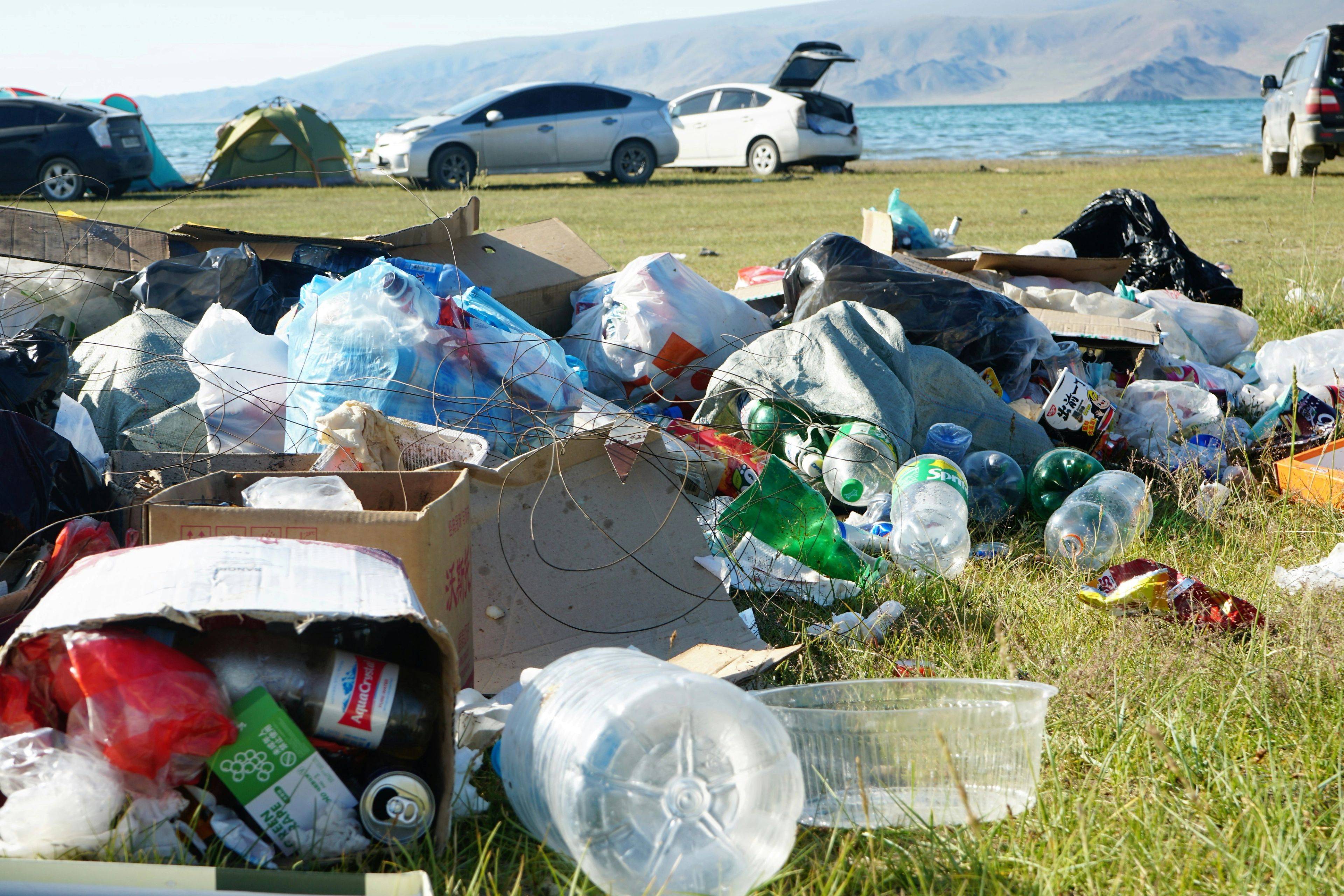
Large events generate a staggering amount of waste. A typical festival in Australia can produce around 2 kilograms of waste per person, per day.
Despite the scale, recycling is still an afterthought for many big and small events, with unclear instructions and poor waste segregation. When rubbish ends up in the wrong bin, entire batches of recyclables can be sent to landfill.
As a sustainable event waste management company, we know that clear signage and well-structured sorting systems can go a long way in boosting recycling numbers. When used together, they help attendees understand what goes where.
This blog explores the importance of signage and event sorting in creating a more sustainable event.
The Importance of Recycling at Events
Environmentally, effective recycling reduces landfill waste, lowers carbon emissions, and ensures valuable materials like aluminium and PET plastics can be reused. Socially, it signals that organisers are committed to responsible event operations and community wellbeing.
There are also significant financial benefits. Effective recycling decreases landfill disposal costs, and events participating in deposit schemes, like City Return and Earn, can access refunds for eligible containers.
Yet recycling in a big event isn’t easy, and organisers must deal with waste contamination, attendee confusion, and quick-turnaround environments where mistakes can happen. This is where strategic event cleaning services and smarter system design make a measurable difference.
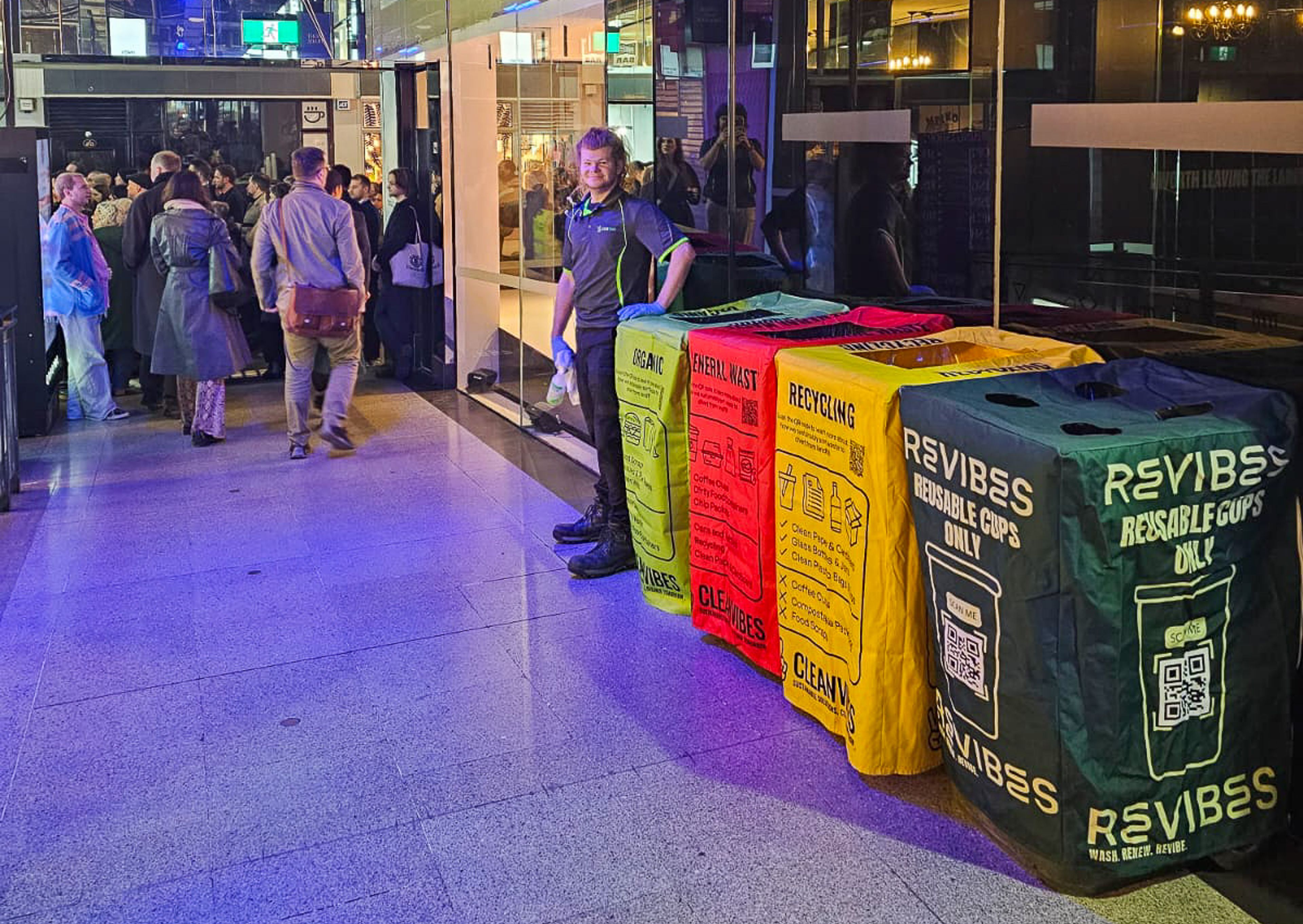
Clear Bin signage at RISING Melbourne
The Role of Signage in Promoting Recycling
Waste signage is highly important in managing a sustainable event. When attendees can clearly see where recycling stations are and understand how to correctly sort their waste, recycling rates rise dramatically. Here’s how you can make better, clearer signs.
Best Practices for Effective Event Recycling Signage
- Colour-coded bins: Assign consistent colours for bin containers (e.g., yellow for containers, green for organics, red for general waste).
- Simple icons: Use universally recognisable symbols for cans, bottles, paper, and food waste.
- Clear photographs: Visual communication helps in fast-paced environments where people rarely stop to read lengthy text. Image-based signage also overcomes language barriers.
- Multilingual or inclusive wording: Ensures signage is inclusive and understandable in international events, conferences or community festivals.
- Large, elevated signs: These help attendees recognise recycling stations from a distance.
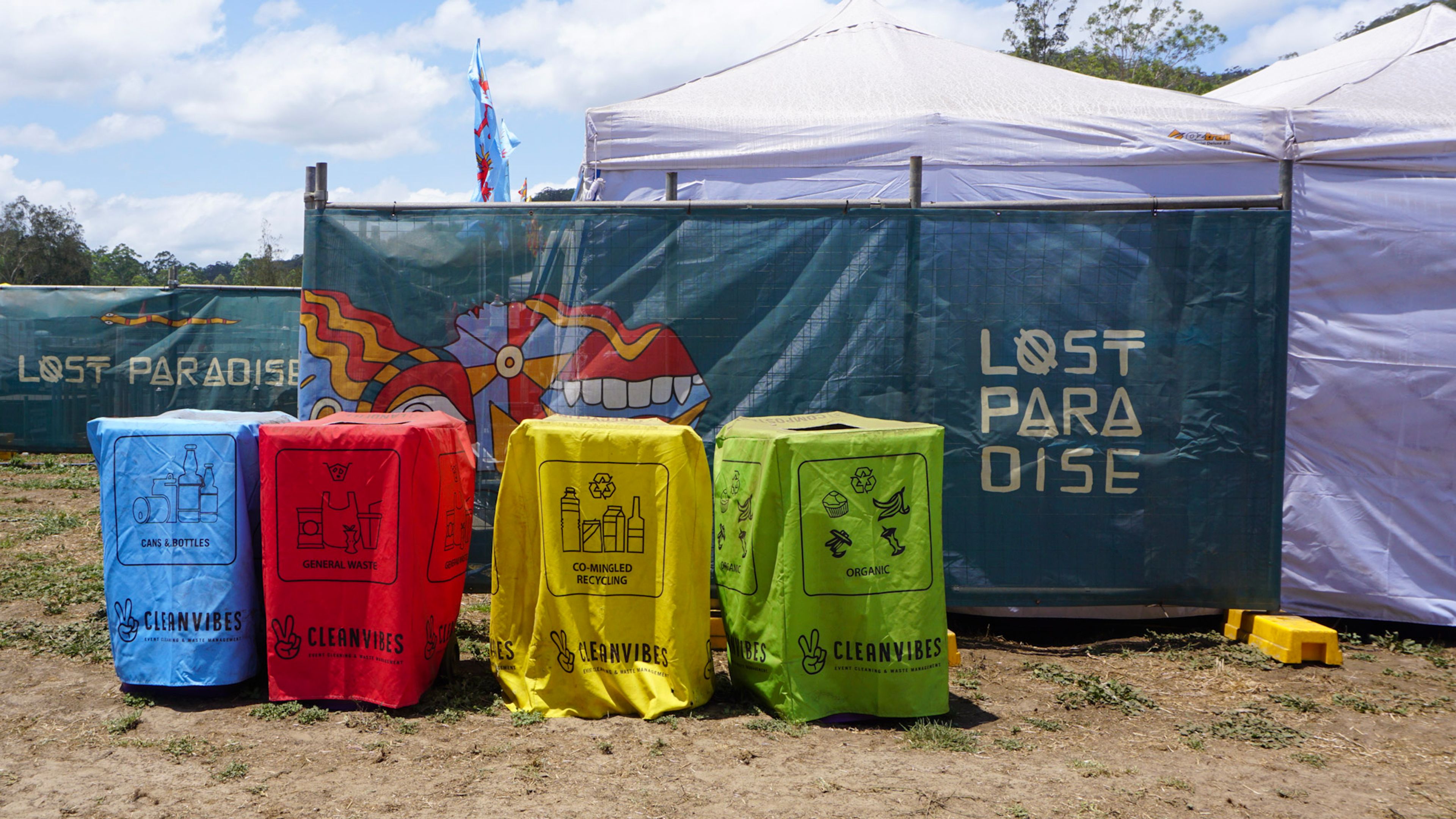
Colour Coded Bins at Lost Paradise
Sorting Systems and Their Impact
In every waste management service, your provider should have and explain their sorting processes.
We typically see three types of sorting systems in events:
- Single-stream recycling: All recyclables go into one bin. This is simpler for attendees, but may lead to higher contamination.
- Multi-stream recycling: Separate bins for paper, plastics, cans, organics, and landfill waste. This system significantly improves recycling outcomes, but it must be supported by strong signage and staff guidance.
- Smart bins: Some events opt for smart bins with sensors, compaction systems or internal compartments to stop overflow.
How to Coordinate Signage and Sorting
An event’s signage and sorting work best when implemented together. Clear instructions paired with well-positioned, well-labelled sorting stations create a seamless flow. Here’s how you integrate them together:
- Strategic bin placement: Position bins near food vendors, exits, bar areas and high-traffic zones.
- Consistent branding and messaging: Use matching colours and icons across the venue to reinforce recognition.
- Instructional signage: Combine visuals with short text explaining disposal rules.
- Directional signage: Point attendees towards waste hubs from multiple angles.
- Post-event: Have a clear process to recycle eligible containers

Colour-coded Bins at Strummingbird Festival
Case Study: Clean Vibes at the Sydney Marathon
Clean Vibes delivered a major recycling initiative at the recent Sydney Marathon with signs and efficient sorting. Volunteers and Clean Vibes staff guided participants, helping sort waste into multiple streams, including:
- Finisher bags
- Soft plastics
- Gel wrappers
- Organics
- CDS-eligible containers
- Paper and cardboard
- General waste
The results were outstanding. 31,566 eligible containers were recovered and recycled, and over 18 tonnes of waste were diverted from landfill across the race weekend. The event also recorded a significant reduction in contamination due to on-site assistance and clear signage.
Recycling Hub at Sydney Marathon
Additional Tips for Successful Event Recycling
- Incentivise attendees: Consider competitions, reward points, or giveaways to increase recycling engagement.
- Partner with local waste management companies: Companies like Clean Vibes can offer guidance on the best recycling streams, local regulations and effective transport options.
- Use digital screens or apps: QR codes, venue maps and push notifications can include recycling information and bin locations.
- Train volunteers and staff: Human guidance at bin stations is one of the best ways to reduce contamination.
- Waste sorting behind the scenes: Having staff members behind the scenes sorting out waste to recover missed recyclables can be highly effective
With the right systems in place, event organisers can see significant increases in their recycling numbers rather than viewing it as a challenge.
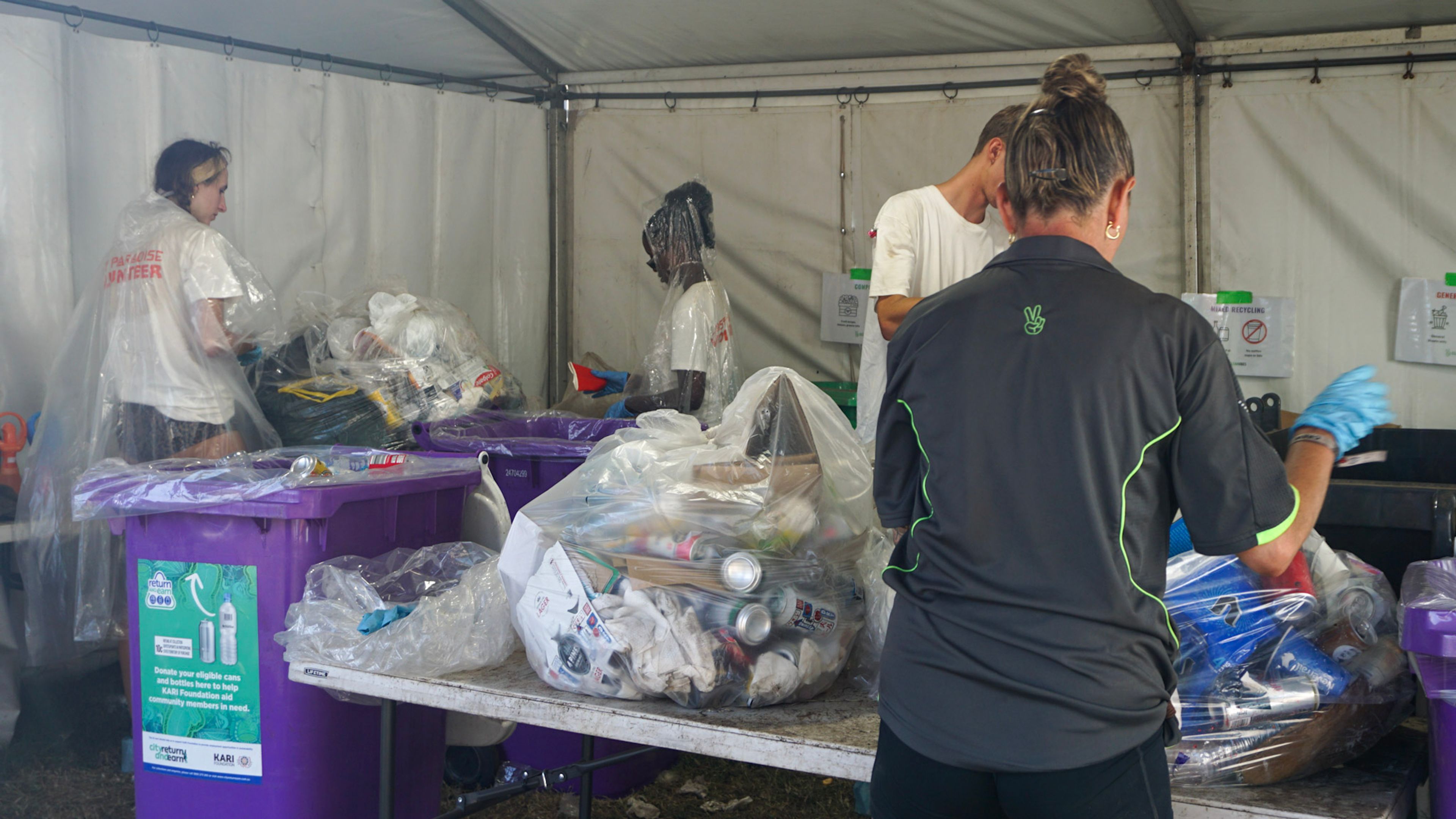
Staff and volunteers waste-sorting at a Back of House Compound to recover recyclables
Key Takeaway
Signage and sorting are two of the most effective tools for improving recycling outcomes, no matter the size of your event. Together, they reduce contamination, increase recycling numbers, and support safer, cleaner venues.
If you’re looking to boost your event recycling efforts, reach out to learn about how we can streamline your event’s waste management.
Contact UsFAQs
What types of signage are most effective for event recycling?The most effective signage uses bold colours, clear icons, and photographs showing exactly which items belong in each bin. Elevated signs help people identify stations from a distance, while multilingual or inclusive text ensures that they are readable.
How can sorting reduce recycling contamination at events?Sorting systems separate waste into specific streams, which reduces the chance of recyclable items being mixed with general waste. When attendees are guided to sort materials at the source, the chances of contamination (rendering eligible containers unrecyclable) drop dramatically. This will improve your recycling quality and recovery rates.
Can signage alone improve recycling rates?Yes, but only up to a point. Clear signage can reduce contamination because it visually guides attendees to make correct choices. However, signage works best when paired with strong sorting systems and staff support (i.e. what happens with the bins post-event). Combining all three components maximises your recycling rates.
How do large festivals manage recycling efficiently?Large festivals typically rely on multi-stream recycling hubs, trained volunteers, strong visual signage, and partnerships with specialised waste management providers like Clean Vibes. Many festivals also conduct backstage sorting to further improve recovery rates. This coordinated approach keeps large volumes of waste processed efficiently and responsibly.
What are cost-effective ways to implement sorting systems at small events?If you’re a small event organiser, start with simple multi-stream stations, basic colour-coded signage, and lightweight bin frames. Consider also partnering with local recycling providers to ensure your materials are processed correctly. Lastly, you may want to engage with small teams of volunteers to coordinate your waste during the event.